StarReign

A two-player hex board game, built from scratch as a love letter to Star Control II

Completed

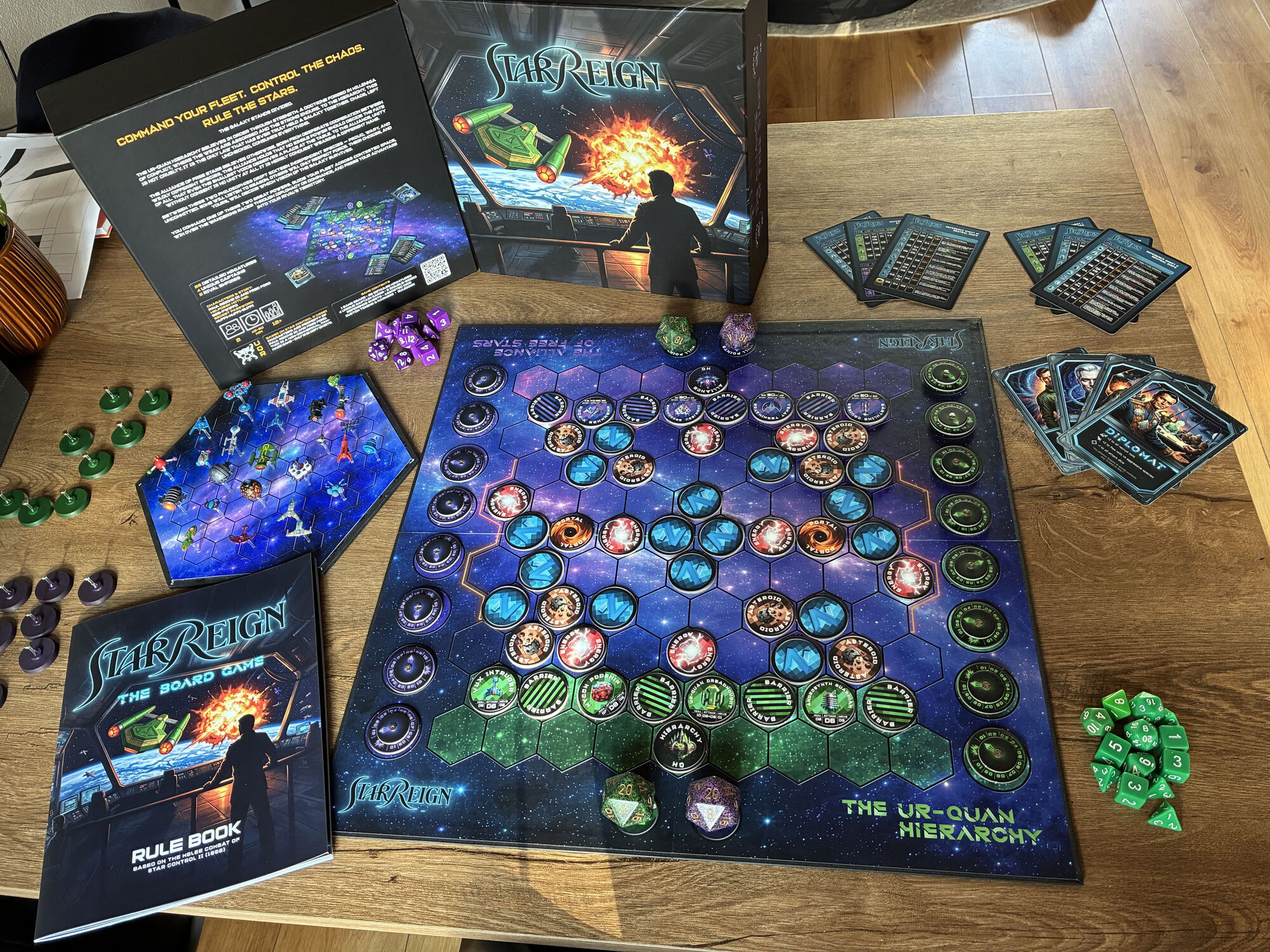
Star Control II (1992) sits in my personal top 3 of all time. I played it on DOS with my best friend, and decades later I wanted something we could play together at the kitchen table: a board game built around the game’s legendary ship-to-ship melee. No expansions, no Kickstarter, no shop. Just one copy, made for the two of us.

StarReign is a non-commercial fan tribute to Star Control II by Paul Reiche III and Fred Ford (Toys for Bob).

Players
2
Playtime
45–90 min
Board
9 × 11 hexes, 44 mm each
Miniatures
26 hand-painted ships
Captains
Diplomat · Vanguard · Navigator · Enthraller
Copies
1

The journey

08 chapters
CH 01 Idea

It started with a display case

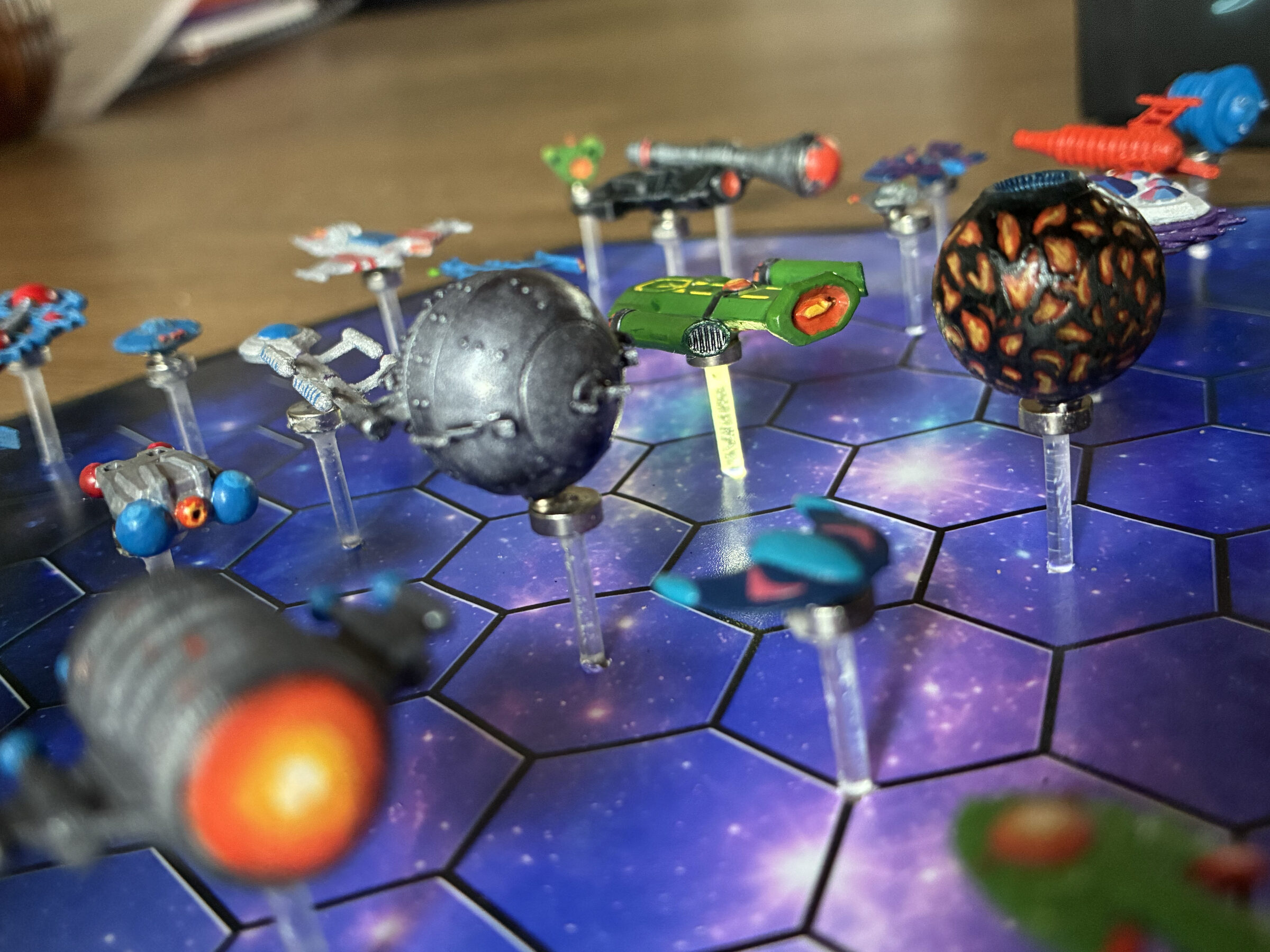
This was never supposed to be a board game. After the Sierra Trio I wanted to do more retro DOS, and that’s how I ended up at Star Control II. While I was 3D printing the ships, I got the idea to put them in a display: a hexagonal, LED-lit display case. When I posted about it, someone asked: “Is this for a board game?” That question stuck.

So the plan changed: a 2-player game based purely on the melee combat. One rule I set for myself from day one: like in the original, a tiny ship has to be able to beat a big one. A system where the biggest hull always wins would kill everything that made the original fun.
CH 02 Rules

Rules of engagement

The hardest part was combat. Every ship in Star Control II plays completely differently, so I split each ship into a free primary weapon and a special ability that costs Energy. Specials come in three tiers, from small tricks to game-changers, and the shared Energy pool is visible to both players — perfect for a bit of tactical bluffing.

Two factions face off: the Ur-Quan Hierarchy and the Alliance of Free Stars, each with four starting ships. The rest of the galaxy sits face-down on the board as neutral ships you can try to recruit — or flee from, if you’re unlucky enough to bump into the Ilwrath. Four captains add their own bonuses. Some ships are deliberately wild: the Shofixti self-destruct feels overpowered, but in Star Control II the Shofixti were always a wildcard, so it stayed.

CH 03 Board

The hex saga

Everything on the board is derived from one measurement: the longest miniature, the Earthling Cruiser at 3.5 cm. That gave me 44 mm hexes, enough room for every ship without them bumping into each other, on a 20” × 20” foldable board.

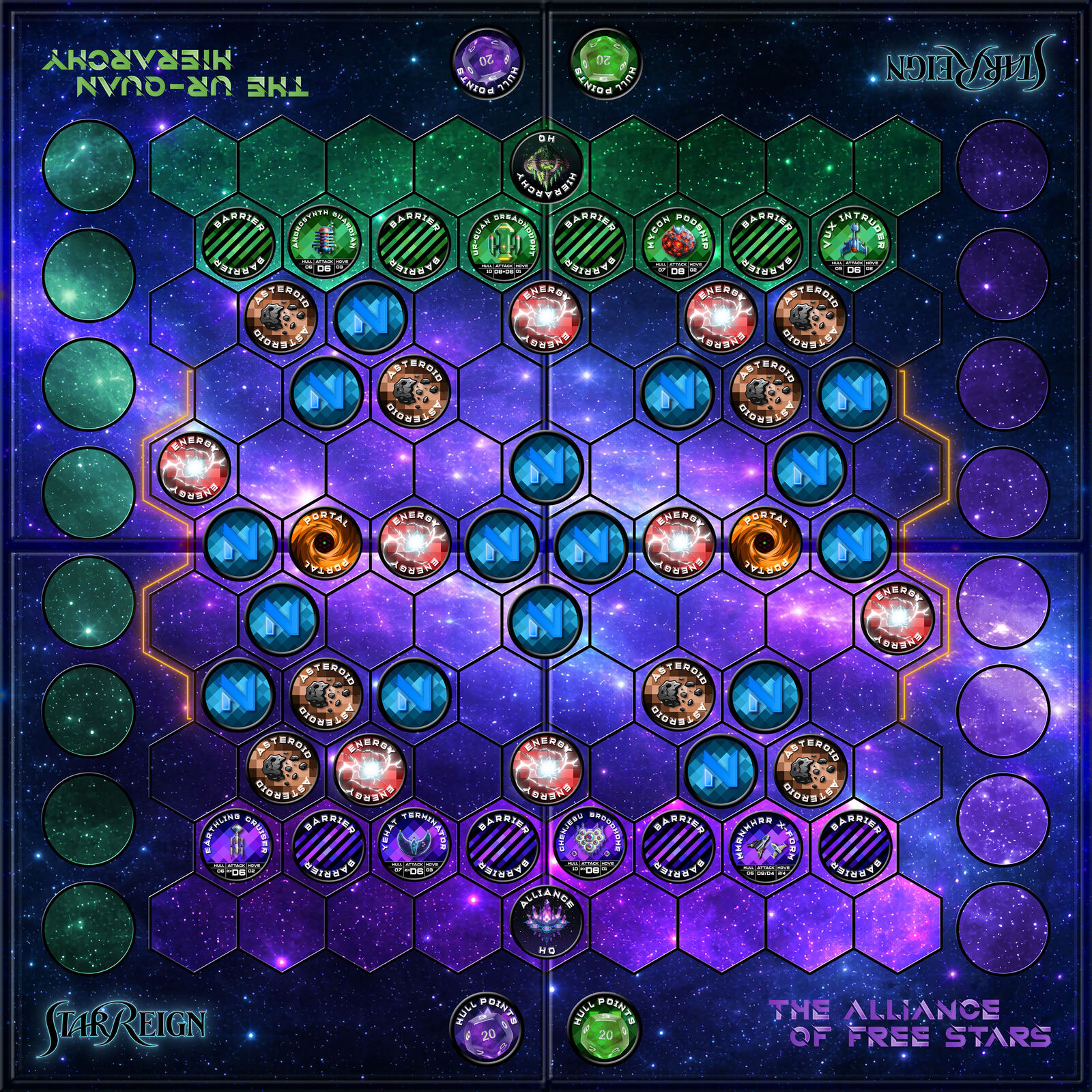
It may not seem like a big deal, but it sure was: which way the hexagons are turned. Flat sides together or points together turned out to be a fundamentally different grid, and it took a few rebuilds to get it right. Along the way the board gained portals (great for a surprise attack, terrible when they dump you in the wrong spot), permanent barriers and a fixed HQ. The win condition became: park 18 or more Hull points inside the enemy zone. Which means you also have to think about leaving ships behind to defend your own.

The default board layout
CH 04 Art

Pixels, portraits and a lot of QA

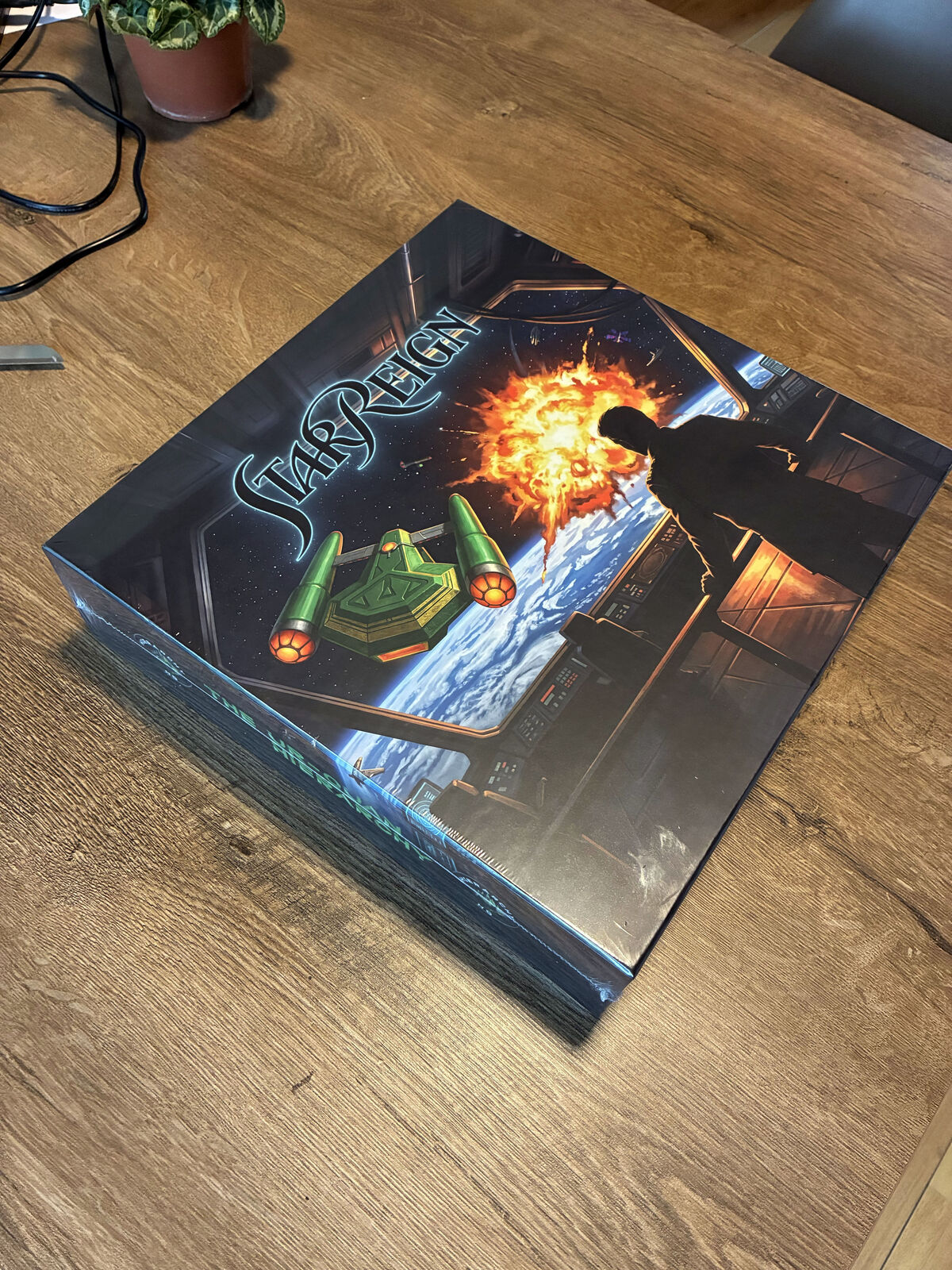
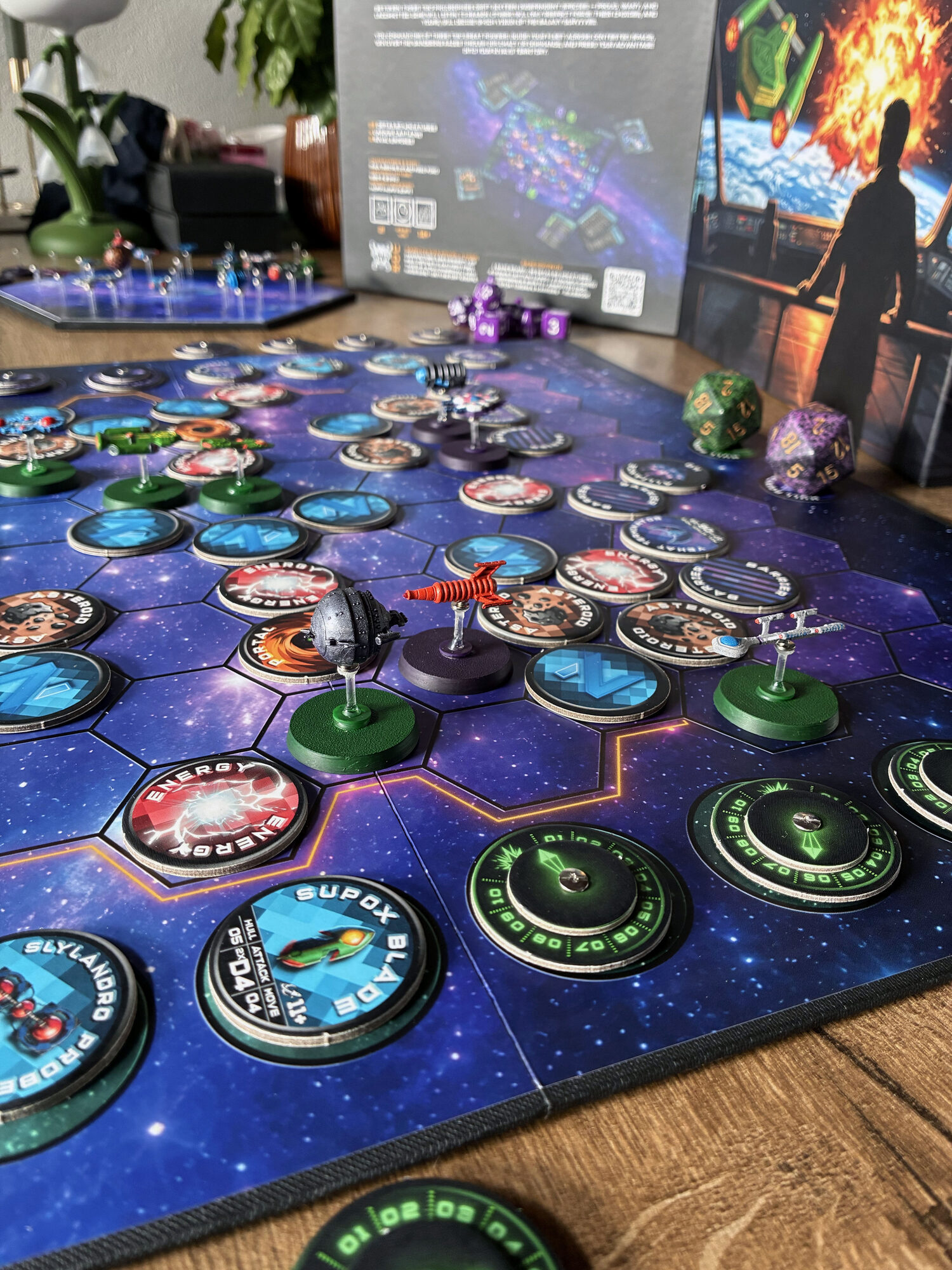
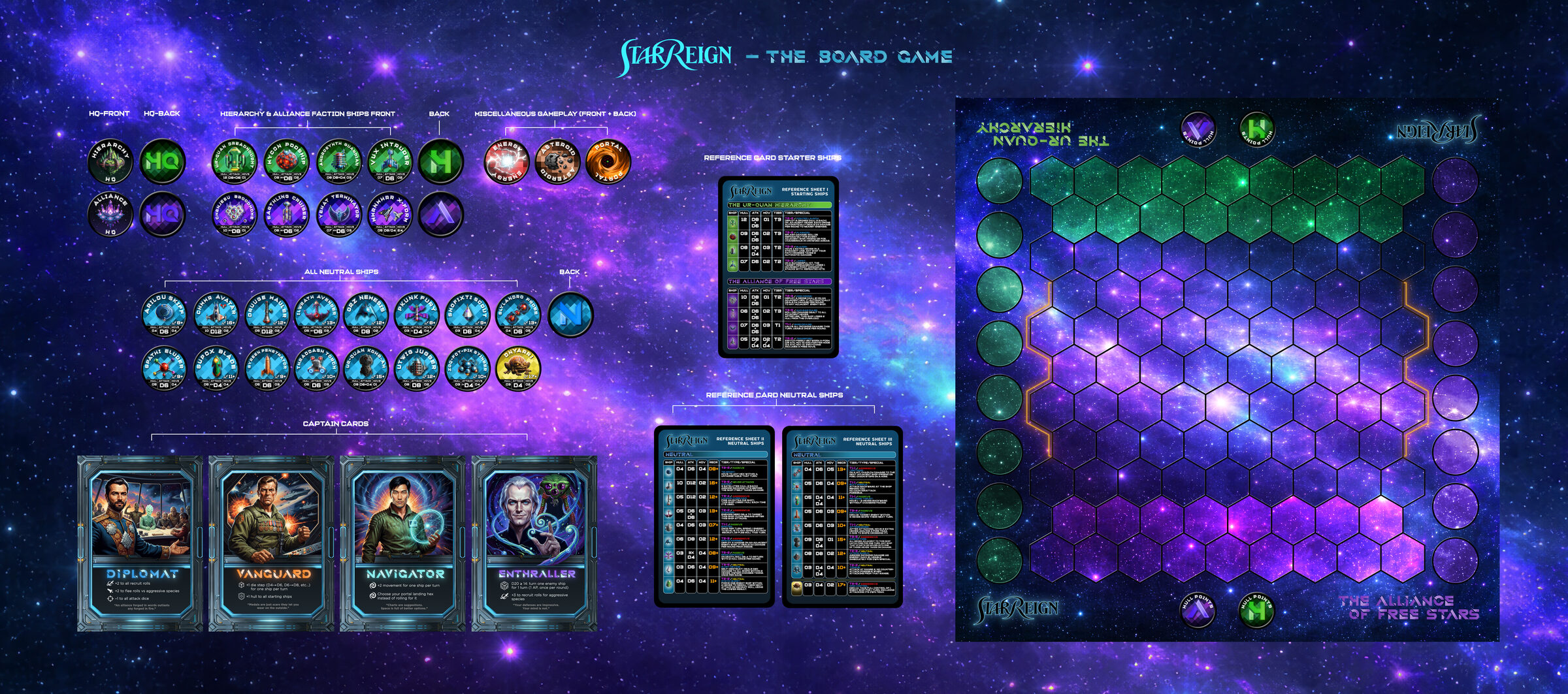
Every ship got a round chit with its name, Hull, Attack and Move. At first I wanted to keep the feel of the original 16-bit graphics, but in the end I decided to give it all a more modern look. The box, the Captain cards and the manual are based on old 1950s sci-fi art, while the ships on the chits got a more modern style.

Then the checking started. Swapped attack values, wrong Hull numbers, even an entirely missing ship — every full-set review caught something. A very simple but elegant detail: the rare Dnyarri chit is the only chit with a gold background, while the outer rim is identical to every other neutral chit. Face-down, it can’t give itself away.

Every asset of the game on one sheet
CH 05 Name

A new name and a box

The game needed its own name, given the troublesome legal history. After a long list of candidates it became StarReign. I always like it when a title works two ways phonetically (Slayer’s Reign in Blood, anyone?).

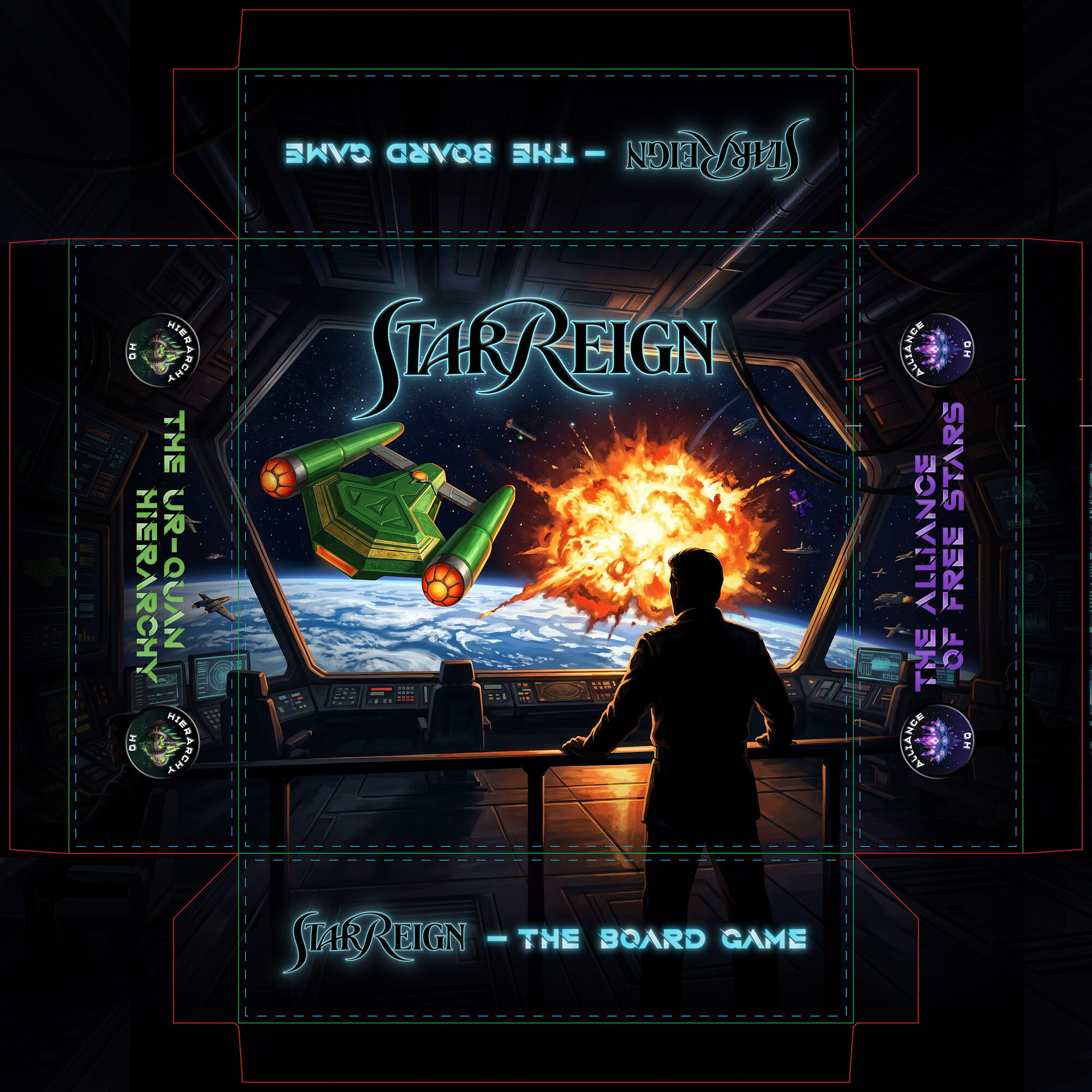
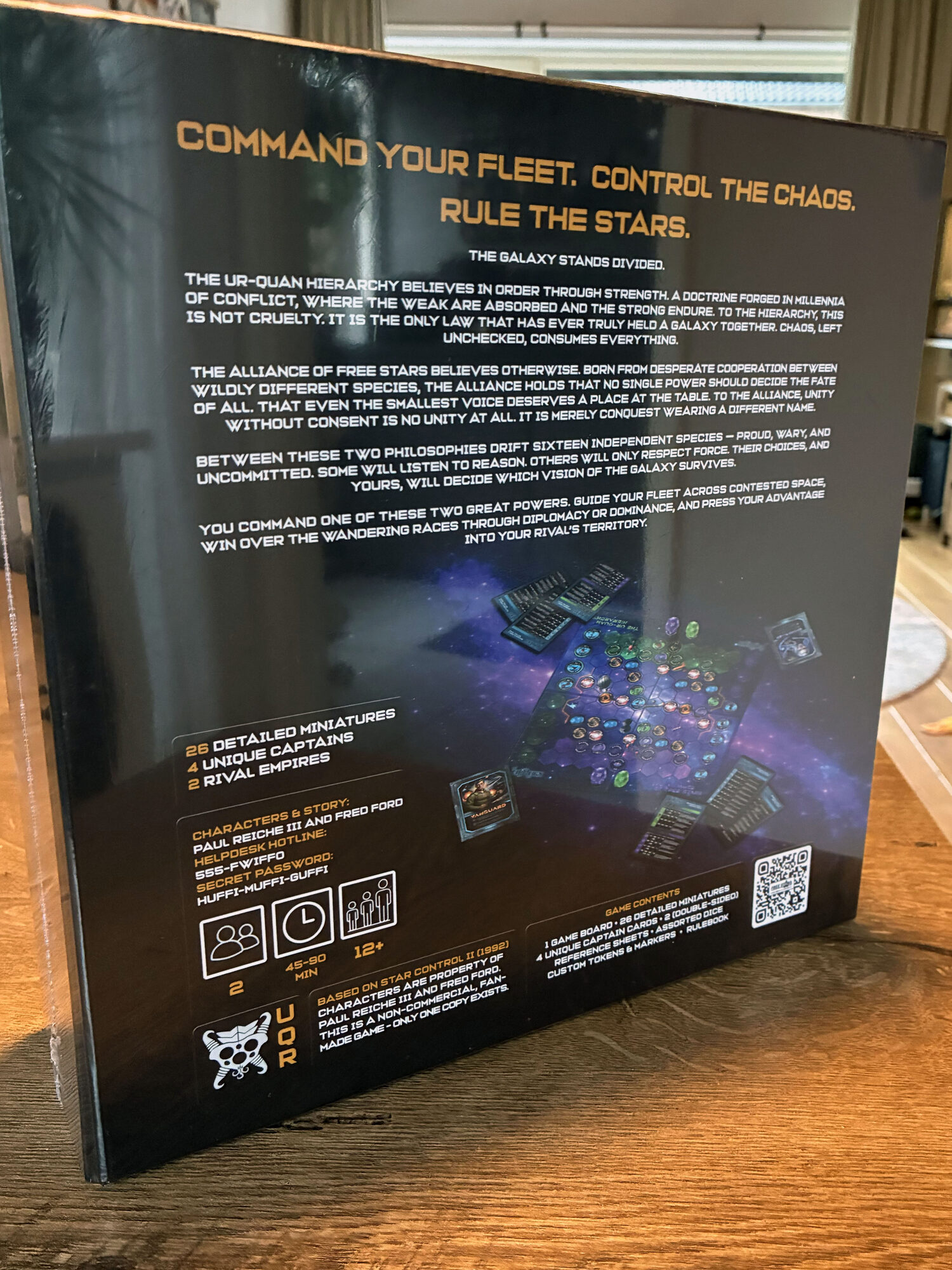
When you start a project like this and decide to do everything yourself, you really learn to appreciate all the effort that goes into a board game. The box is what should inspire you to explore that particular game world, so I spent quite some time on the front and back. Especially the back was quite a puzzle. But I’m really happy with how it all turned out. I’ve had lots of positive feedback on the finished piece, but also lots of disappointment because “only one copy exists.”

The box lid, ready for print
CH 06 Book

The rulebook

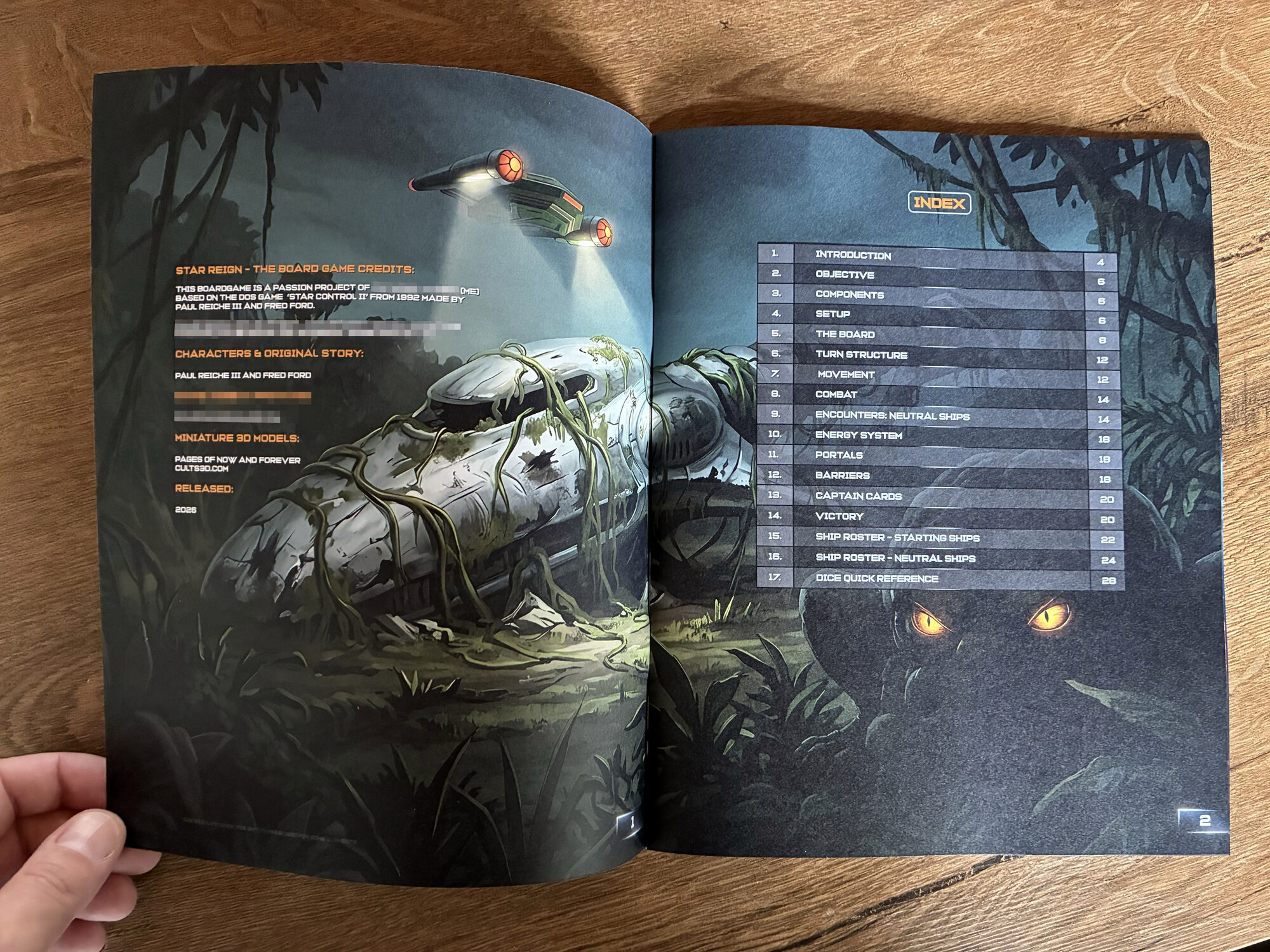
The rulebook was quite a challenge. There are so many things you have to think of, and even the smallest omission can throw the entire balance off. I finally settled on a 28-page, fully illustrated booklet with lore, a default board setup and full ship tables.

The backgrounds of the ships fighting turned out really nice. They give you a sense of all the epic battles and of how unique the ships and their attacks are.

The printed rulebook
CH 07 Print Aug 2026

Going to print

Since this was a unique print, I wanted everything premium. I went with a seamless foldable board with a matte finish, a rigid box with a black core (it will be opened a lot over the years) and 2.6 mm die-cut chit sheets.

The Hull Damage Dials got their own design: a small two-layer rotating counter, 12 in green and 12 in purple. I had to manually stencil out the center to combine the two discs and close them with the smallest Chicago screws I could find. And finally, a custom-printed bag holding the matching green and purple dice sets for each player.

CH 08 Play Oct 2026

On the table

And after 4 months we are finally able to play the most offline version of Star Control Melee. I hope the game plays as nice as it looks. If not, I will still have a very expensive-looking shoebox.